

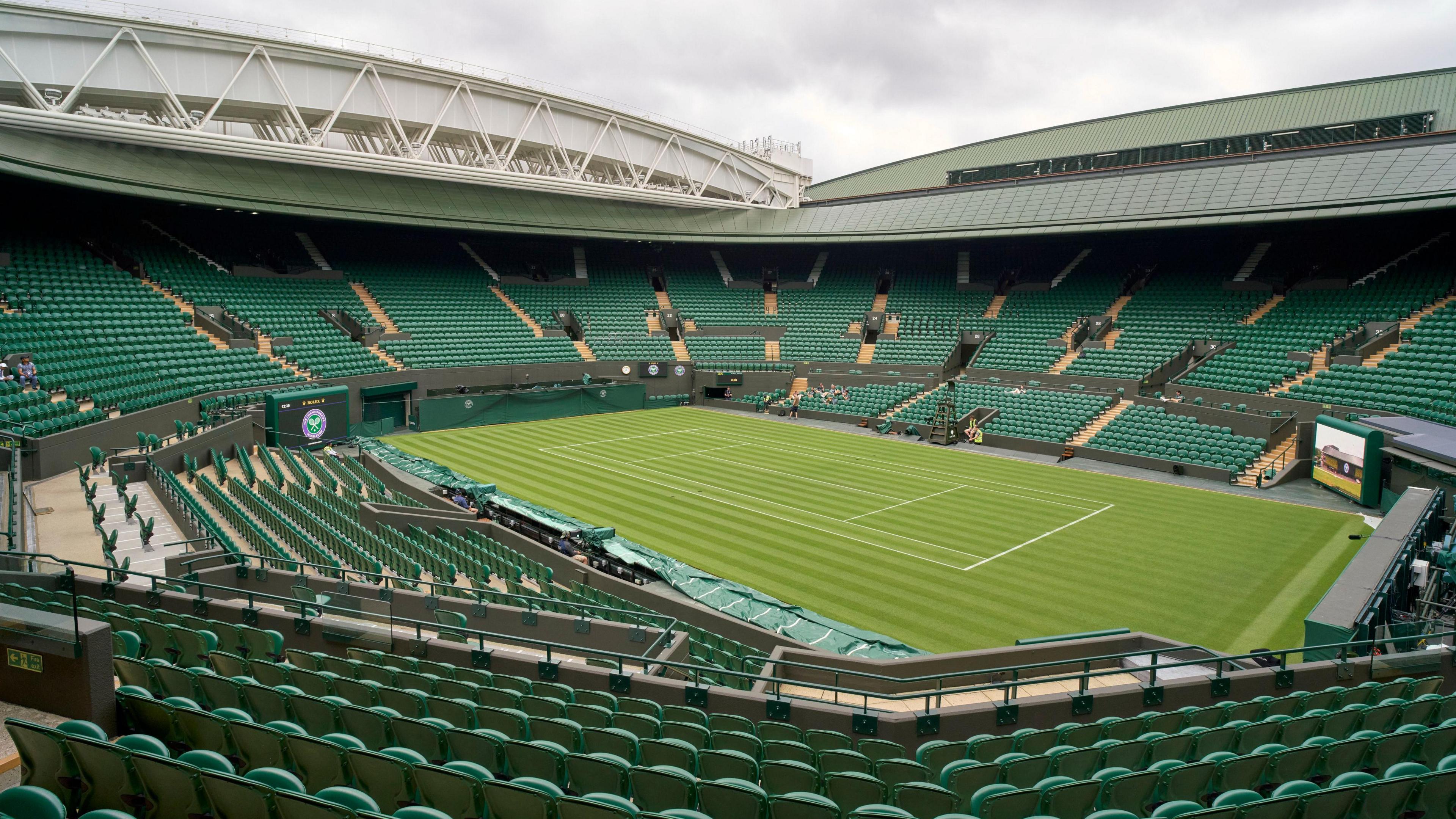
The tournament joins the American and Australian Opens in employing replay technology.
Replay technology are set to arrive at The Championships in the upcoming tournament.
Competitors are granted the ability to contest particular decisions made by the official, following the practice already in place at each of the American Grand Slam and the Australian Open.
This innovation will be operational on the main stadium and the number one court for the duration of the Championships and on the other four show courts when they are hosting singles contests.
This development comes just a season following the All England Club introduced electronic line calling, which terminated the 147-year tradition of line judges.
What Can Be Reviewed?
Players cannot to dispute the accuracy of the electronic line calling, but are allowed to request the official to review specific decisions, including:
- If a ball has bounced twice.
- If a shot made contact with an opponent's racquet or body during play.
- Possible interference end of a rally.
Notably, there is no limit on the number of challenges a competitor can initiate.
Practical Application
An illustrative incident took place in a recent tournament last week, where a top player used the review system against his opponent.
The British player admitted it was a difficult call for the umpire, but thought his rival had "played the rules quite well."
The umpire viewed a video and ruled Draper was responsible for interference, awarding the rally to Medvedev.
Growing Trend
Video reviews are not new for Grand Slams. It was adopted at the US Open since 2023 and the Aussie Open this year.
Furthermore, it is becoming more common on the WTA circuit, and by the coming year the ATP circuit will have video reviews in place at every one of its events.
Additional Innovations
A further innovation at Wimbledon this year involves the addition of graphical cues on scoreboards to complement the audio calls from the electronic line calling system.
This solves instances where the crowd have sometimes been uncertain if a ball was in or out.
Finally, with precisely 100 days remaining until the beginning of the tournament, the AELTC have further revealed an increase in daily attendance at the qualifying competition in the qualifying venue.
